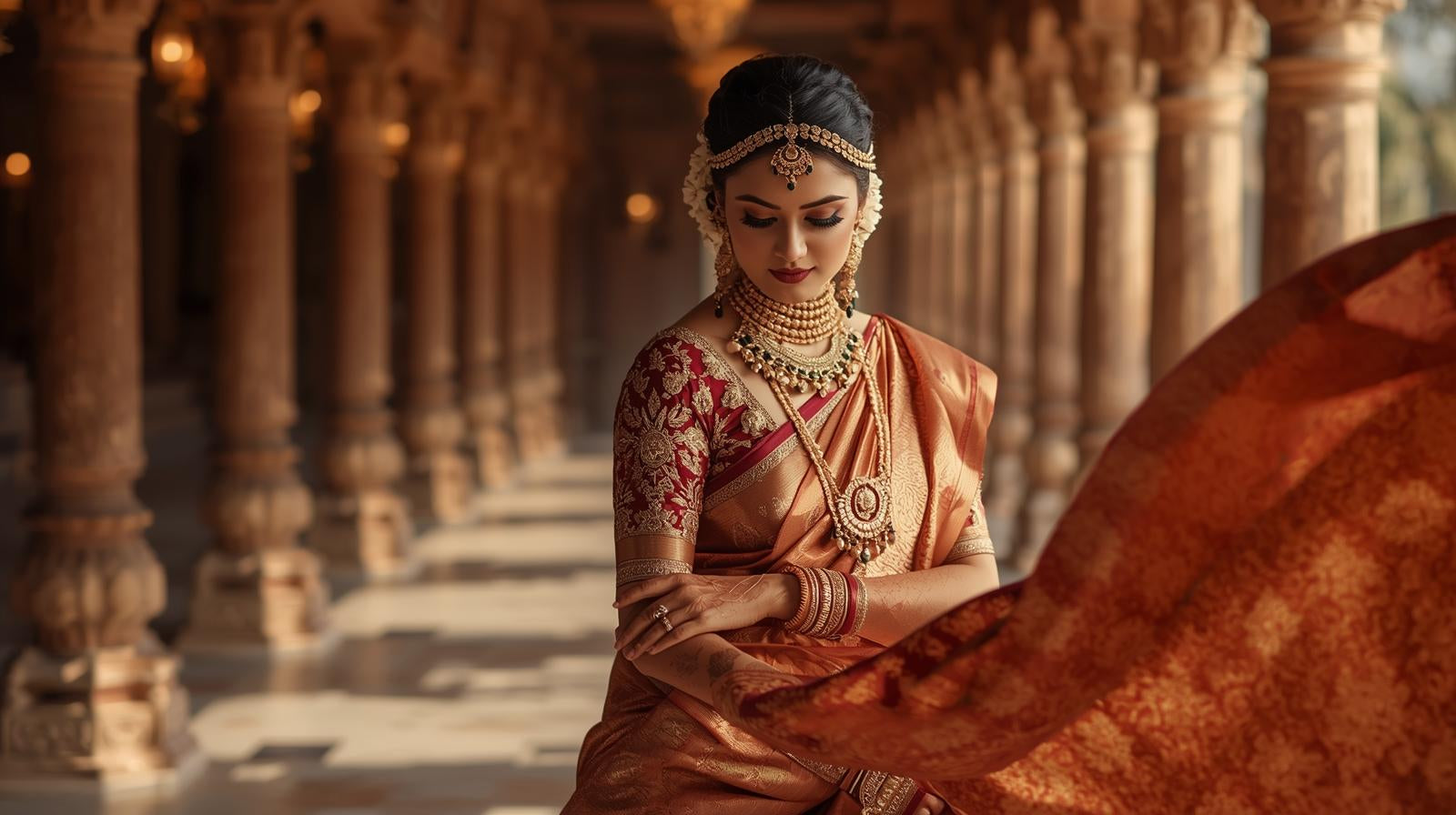

How to Identify a Pure Kanjivaram Saree: Expert Buying Guide 2026
A Kanjivaram saree is more than bridal attire, it is a symbol of heritage, craftsmanship, and timeless elegance. For generations, these luxurious silk sarees have defined South Indian weddings. Whether you are searching for the perfect wedding kanjivaram saree, browsing a premium bridal pattu sarees collection, or selecting marriage sarees for bride, knowing how to identify authenticity is essential.
1. Check the Silk Quality
Pure Kanjivaram sarees are woven from high-grade mulberry silk. The silk should feel rich, dense, and slightly heavy, yet fall gracefully. Authentic silk has a natural sheen that glows softly rather than shining brightly. When folded, the fabric should hold structure, indicating high thread density.
2. Burn Test for Identifying Pure Kanchipuram Sarees
One simple way to test the authenticity of a pure Kanchipuram saree is the burn test. Gently pull out a tiny strand from the silk body or zari thread and burn it carefully. Pure mulberry silk burns slowly and smells like burnt hair, leaving behind soft ash that crumbles easily. In contrast, synthetic or blended fibres melt, emit a plastic-like smell, and form hard residue. While this test can indicate silk purity, it should be done carefully and ideally alongside other authenticity checks.
3. Examine the Zari Carefully
Zari defines the grandeur of a Kanjivaram. Traditional zari is made from pure silver threads coated with gold. This significantly influences the pure gold zari kanjivaram saree price. Gently scratch the zari—if you find a red silk core beneath a silver layer, it indicates genuine gold zari. Artificial zari often reveals white or plastic threads.
4. Feel the Weight and Texture
Original Kanjivarams are heavier due to the thick silk and zari work. A feather-light saree usually signals blended silk or imitation zari. The texture should feel firm, luxurious, and structured.
5. Observe the Weaving Technique
A pure Kanjivaram saree is handwoven using the traditional three-shuttle technique, where the body, border, and pallu are woven separately and interlocked. This makes the saree exceptionally strong. Look closely at the border joints, authentic handloom sarees display a neat interlocking weave.
6. Identify Traditional Motifs
Classic motifs include checks, mango buttas, peacock designs, and coin patterns. One of the most iconic styles is the temple border silk saree, inspired by South Indian temple architecture. These designs are highly valued in bridal collections and symbolize tradition, blessings, and prosperity.
7. Choosing the Right Bridal Kanjivaram
A perfect bride wedding saree collection should feature rich colours, grand borders, and detailed pallus. Deep reds, maroons, emerald greens, royal blues, and antique gold tones remain bridal favourites, while modern brides are also embracing softer hues like blush pink, ivory, and lavender. Premium marriage sarees for bride often incorporate heavy zari work, intricate motifs, and contrast pallus.
8. Understand Price Benchmarks
The pure gold zari kanjivaram saree price depends on silk quality, zari content, design complexity, and weaving hours. In 2026, bridal Kanjivarams typically range from ₹60,000 to ₹1,50,000, while heritage pure gold zari pieces can go significantly higher. Always request silk and zari certification when investing in premium sarees.
9. Buy from Trusted Retailers
To avoid imitations, purchase only from reputed handloom stores that work directly with weavers. Trusted retailers provide transparency, authenticity certificates, and consistent quality assurance.
Final Thoughts
An authentic Kanjivaram saree is a legacy investment. By understanding silk quality, zari purity, weaving techniques, and traditional motifs, you can confidently choose a saree that embodies elegance, tradition, and lasting value. Whether for weddings or heirloom collections, a pure Kanjivaram remains unmatched in beauty and cultural significance.