Navratri Draped in Silk: The Symbolism of 9 Colors in Kanjivaram Sarees
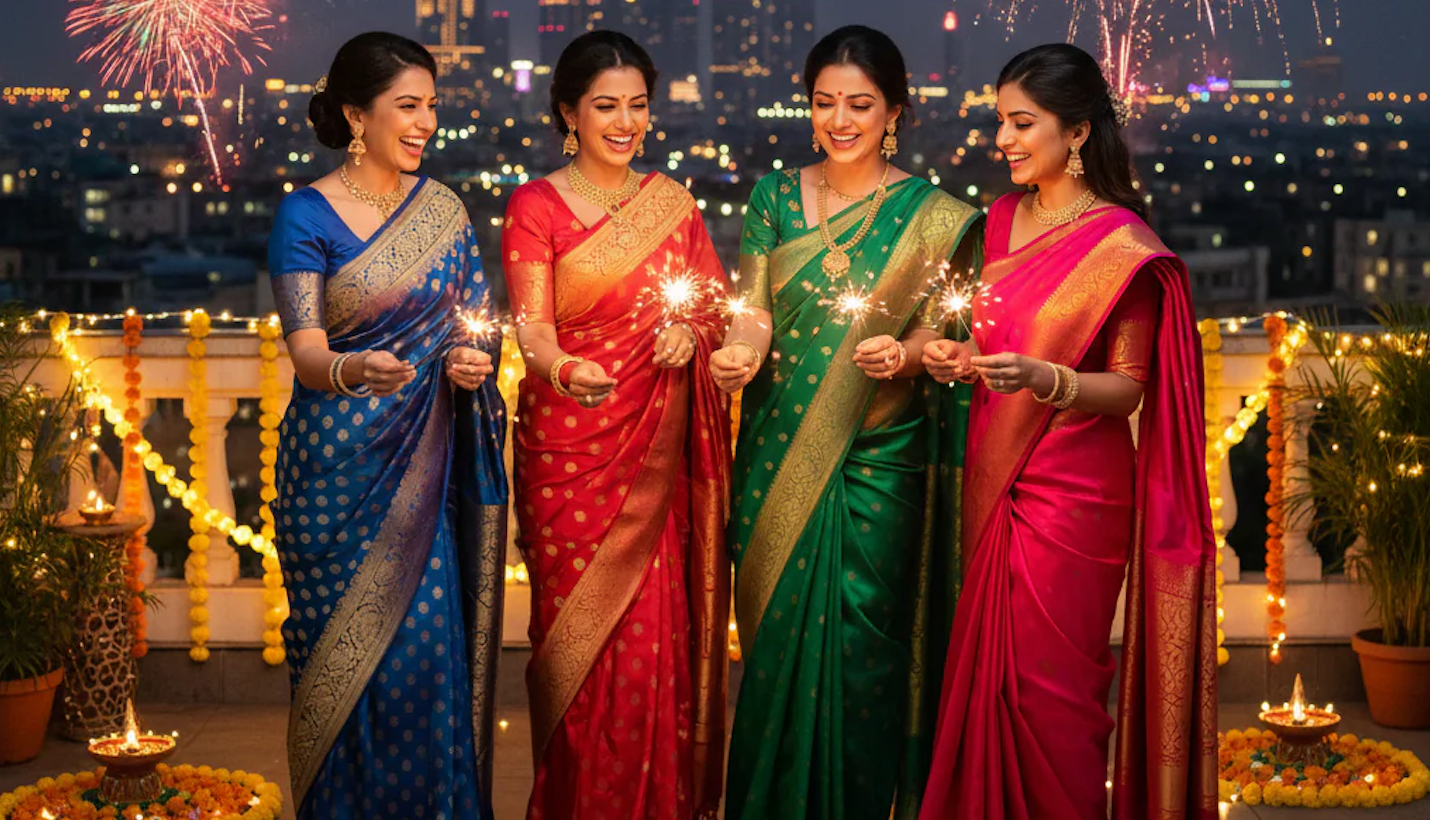
Navratri is not merely a calendar festival, it is a journey of colors, emotions, and energies. Every dawn of these nine nights invites us to embody a shade of the Goddess. And when that symbolism finds its way into the drape of a Kanchipuram silk saree, it transforms from ritual into living art.
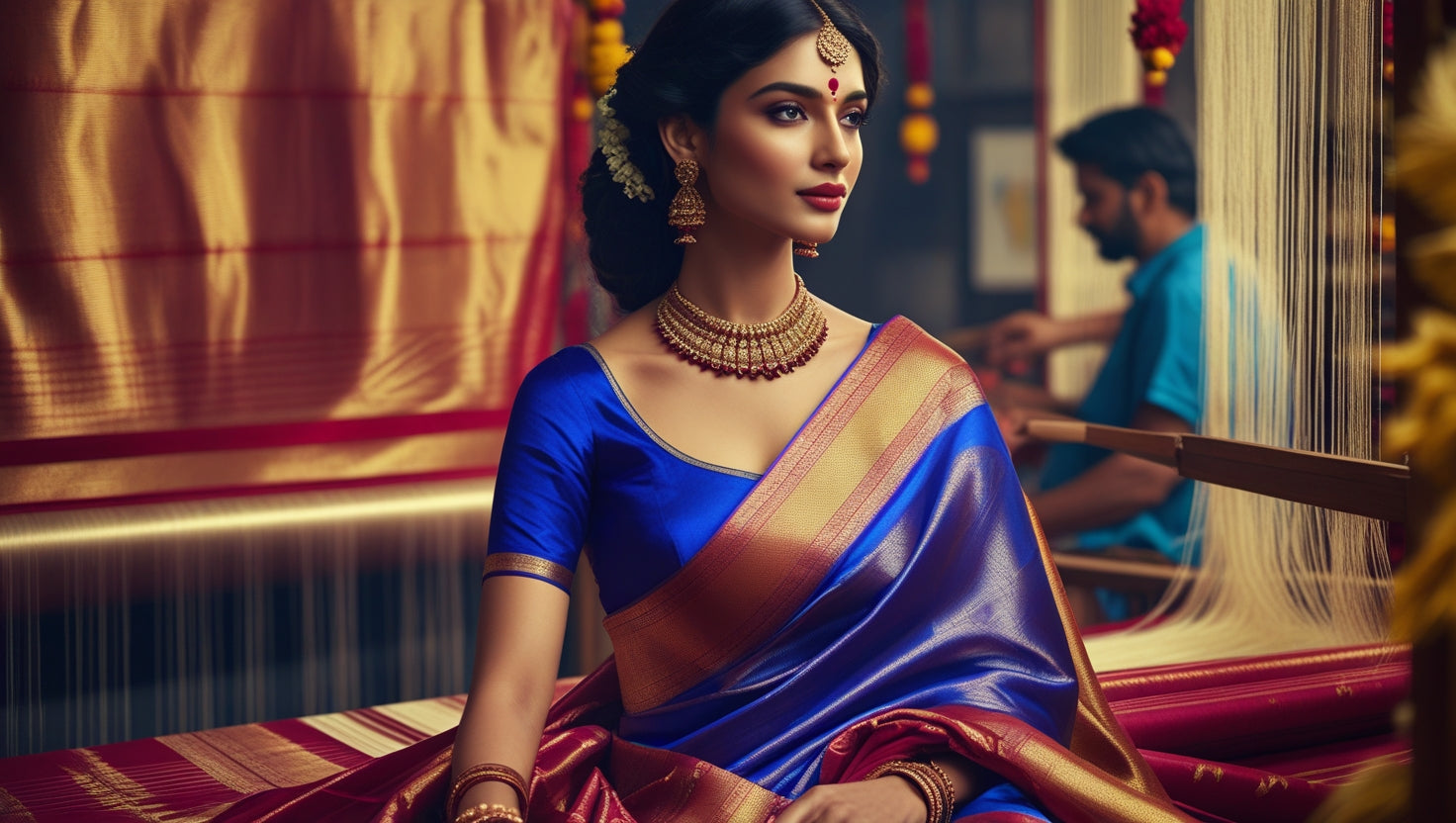
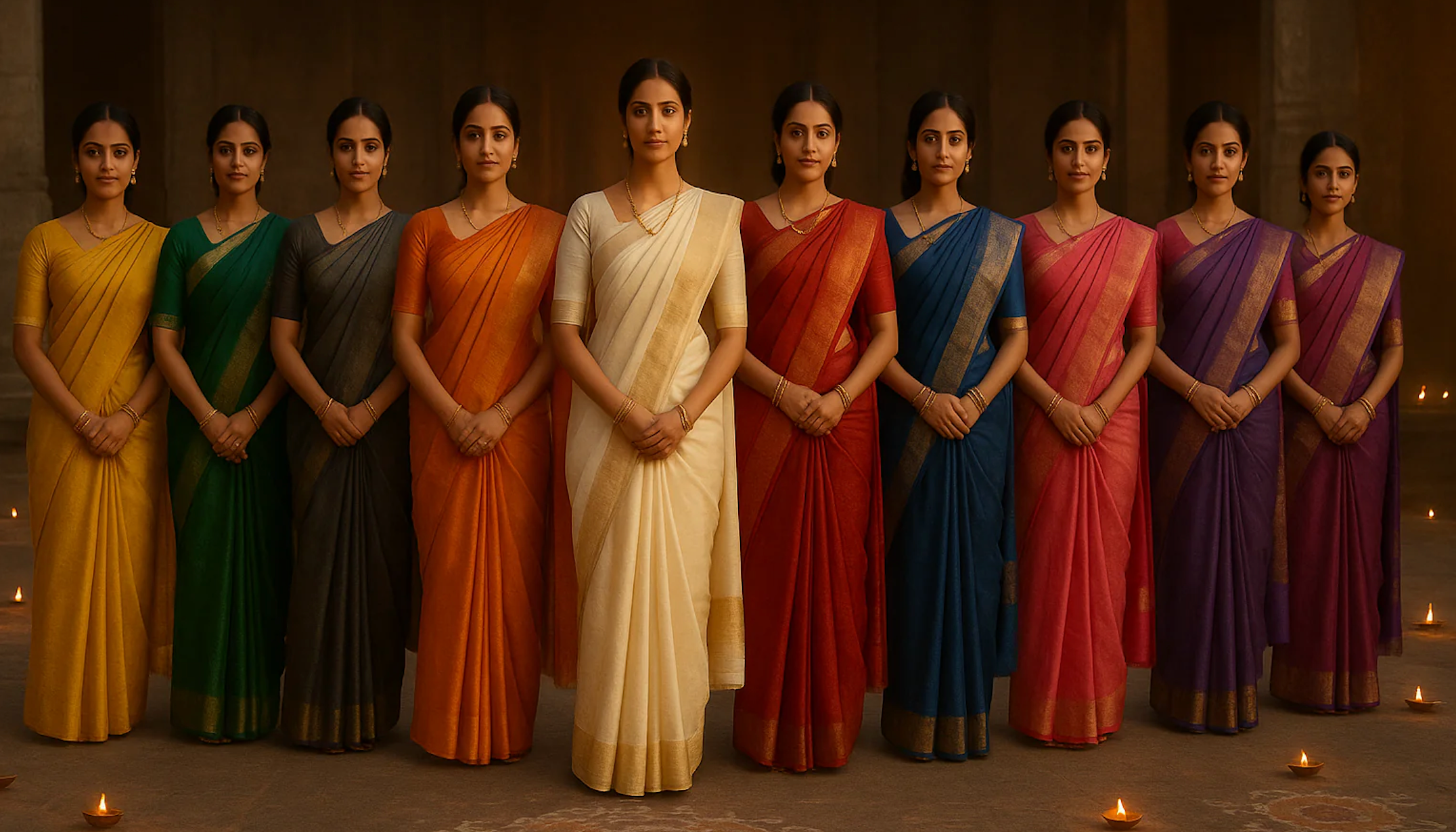
Unlike fast fashion hues, the nine colors of Navratri are not random; they are frequencies. Blue steadies the restless mind, yellow carries joy like sunlight, red fuels power, while white dissolves the ego into serenity. To wear these shades is not cosmetic, it is meditative. And when these very hues are handwoven into Kanchipuram silk, they acquire permanence. The lustrous fabric doesn’t just reflect light; it reflects intent.
Think of it this way: a gold zari border on a green silk isn’t only decorative; it mirrors prosperity enveloped by balance. A fiery orange weave doesn’t just announce festivity; it echoes the spark of inner awakening. Each thread pulled by a weaver is not mechanical - it is a silent invocation, a prayer wrapped in warp and weft.
Here’s how each day of Navratri unfolds in silk and spirit:

Navratri, then, becomes an inward celebration disguised as an outward spectacle. Dressing in nine colors is not tradition for the sake of tradition, it is alignment with energy. A Kanjivaram saree gives that alignment permanence. Long after the festival lamps are put away, the saree remains holding the memory of devotion in its folds.
This Navratri, don’t just wear color. Wear power. Wear silence. Wear joy. Wear a Kanjivaram Silk Saree that does not simply clothe you, but carries forward a centuries-old dialogue between divinity, craftsmanship, and the woman who dares to embrace both.